Different Forms of Bearings
- Hydrodynamic (journal) bearings: Lubricant is formed by hydro-dynamic pressure at high speeds
- Rolling element bearings: ball and roller bearings
- Special bearings: Air bearings (hydrostatic), magnetic bearings
Rolling Element Shape Classification
- Ball bearings are small and support high speeds
- Roller bearings are large and support heavy loads
Load Direction Classification
- Radial bearings → radial load
- Thrust bearings → axial load
- The main difference here is how the roller bearing sleeves are oriented compared to the shaft
Rolling Bearings
- Has
- Outer ring
- Inner ring
- Lubricant
- Balls
- Retainer (to hold the balls)
- Seal (where the seal can have a metal or rubber shield or be open)
- Examples of these include
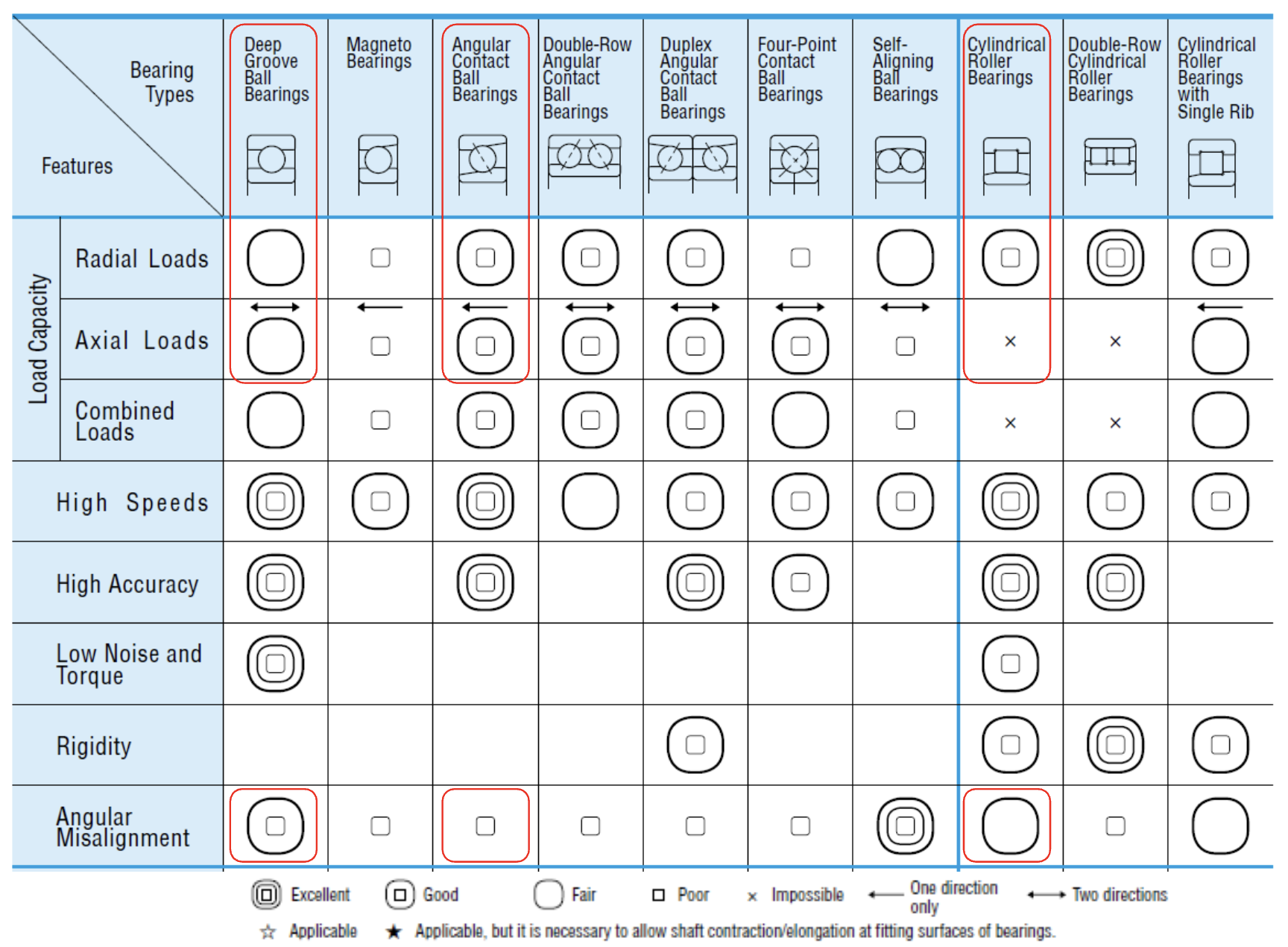
- Deep groove ball bearings → axial and radial loads where the radial load is much higher here
- Angular contact ball bearings → radial loads and some axial (more than the deep groove bearing)
- Radial roller bearings → radial bearing
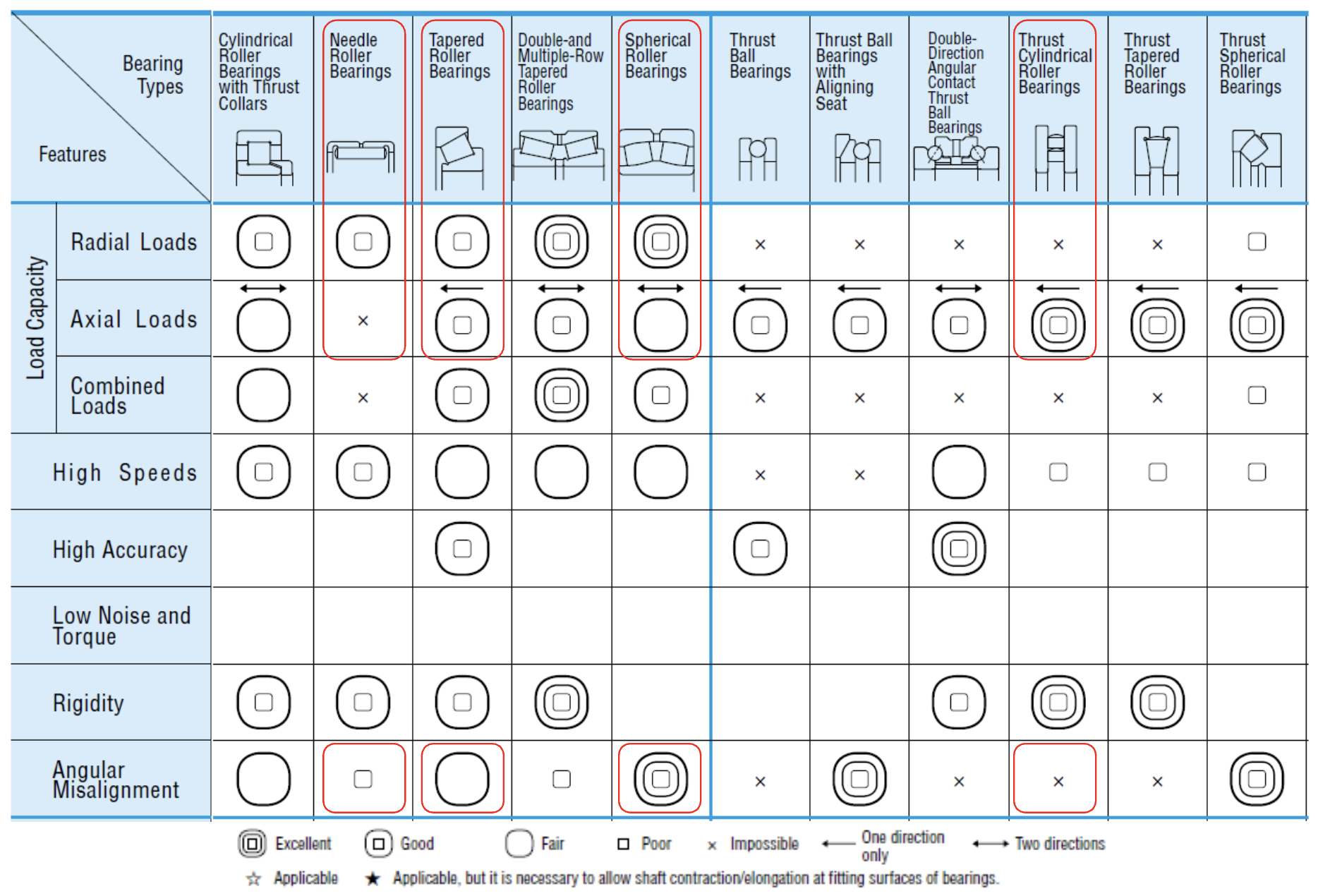
- Taper roller bearings → radial bearing but much more axial loads than the ones previously mentioned
- Spherical roller bearings → radial bearing
- Self-aligning ball bearing → radial bearing
- Needle roller bearings → radial bearing
- Thrust bearings → Axial bearing
Tapers
Note that if a bearing has a taper it can support both loads, if the taper → 90°, it’s a thrust bearing
Roller Bearing Selection Charts
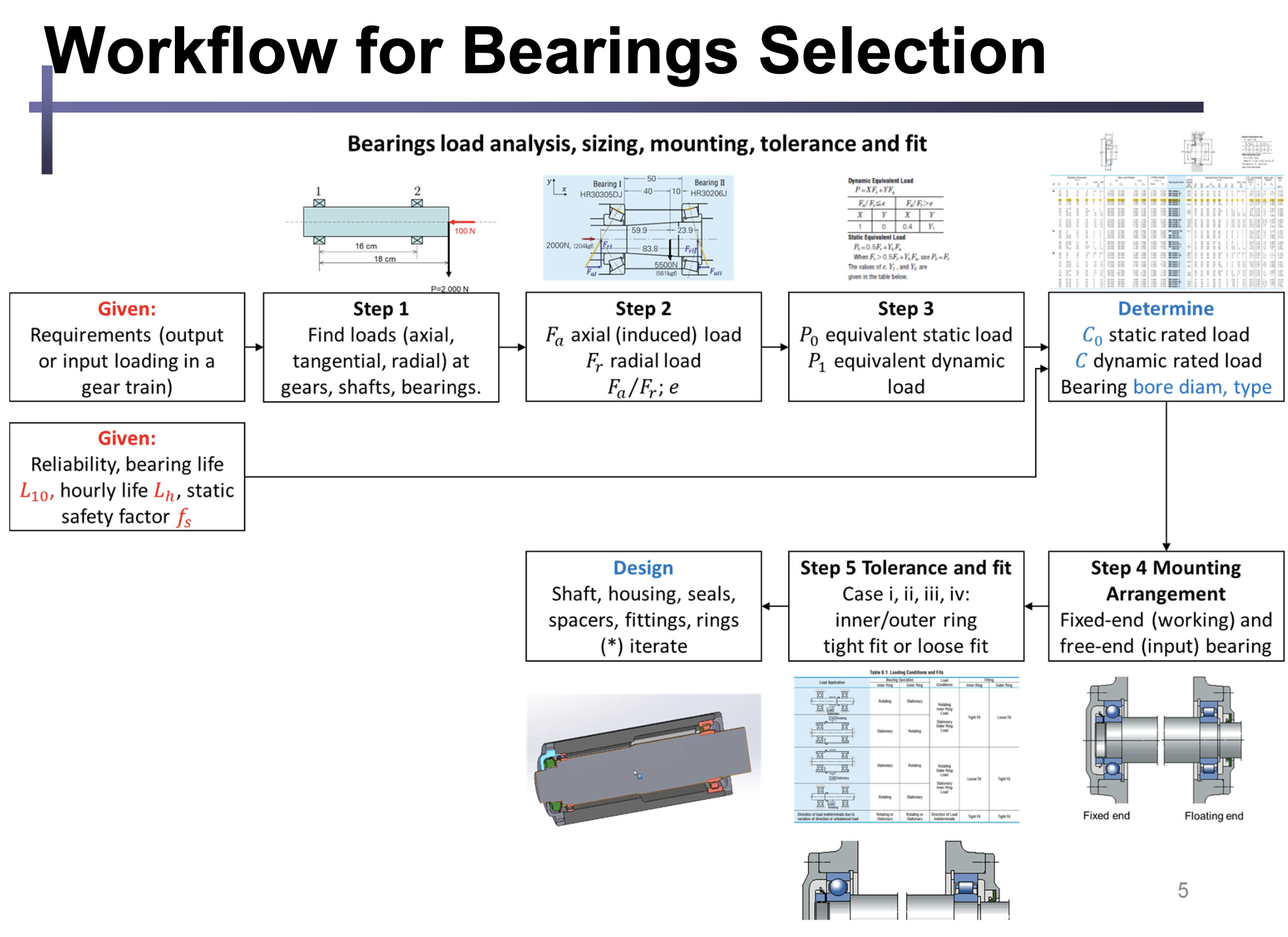
Workflow for Bearing Selection